Kidney disease has a habit of progressing quietly for years, with no dramatic warning signs, nothing that grabs your attention. Often, kidney function has already slipped by the time anything feels wrong. The right tests at the right time, and treatment that actually fits. For people whose kidney disease has advanced, Kidney Disease treatment in Ahmedabad sometimes becomes the option worth exploring, once the kidneys can't keep up anymore.
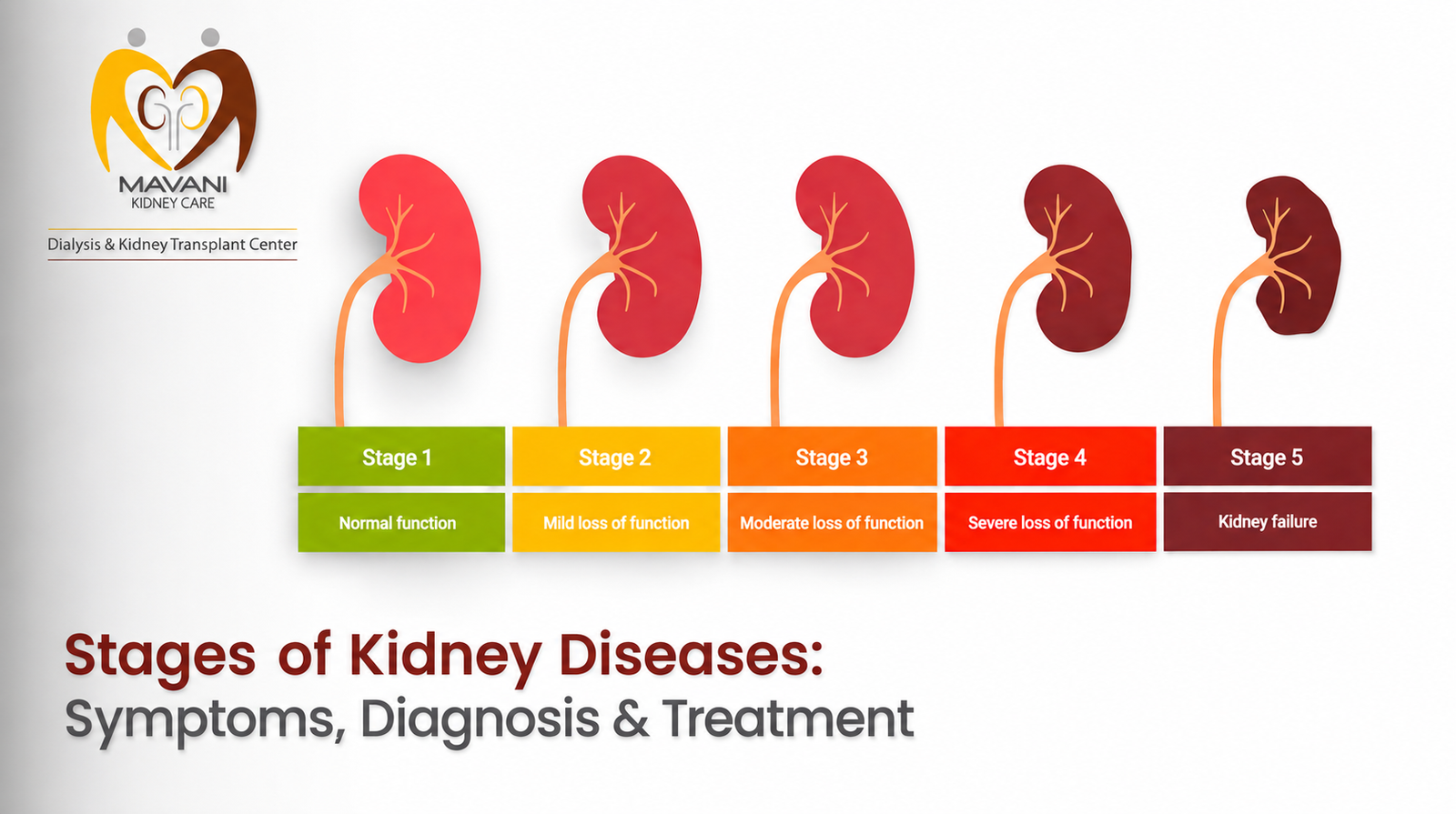
What Are the Stages of Kidney Disease?
Doctors usually diagnose chronic kidney disease, or CKD, by looking at kidney function and signs of damage that have stuck around for three months or more. The main number they lean on is the estimated glomerular filtration rate (eGFR) that, paired with a urine albumin test, gives a decent picture of what's going on.
| Stage | eGFR | What It Means |
|---|---|---|
| Stage 1 | 90 or above | Kidney damage may be present, but filtering remains normal |
| Stage 2 | 60 to 89 | Mild reduction in kidney function |
| Stage 3a | 45 to 59 | Mild to moderate reduction |
| Stage 3b | 30 to 44 | Moderate to severe reduction |
| Stage 4 | 15 to 29 | Severe reduction in kidney function |
| Stage 5 | Below 15 | Kidney failure |
A lower eGFR alone doesn't provide the full picture. Urine albumin, what's causing the kidney disease, blood pressure, diabetes, and other health factors all feed into how doctors judge the risk of progression.
Stage 1 and Stage 2: The Best Time to Act
The early stages are easy to miss, since most people have few or no symptoms at all. Often, kidney disease turns up almost by accident, during a routine blood or urine test done for something else entirely.
What shows up might be protein in the urine, blood in the urine, or other signs of kidney damage.
At this point, treatment is really about protecting the kidney function you still have. Doctors may recommend controlling blood pressure and blood sugar, keeping a healthy weight, reviewing your current medicines, tightening up your diet, staying active, and treating whatever's actually causing the damage. Catching it this early can meaningfully slow things down.
Stage 3: Symptoms May Start Becoming Noticeable
Stage 3 splits into 3a and 3b. Kidney function is reduced by this point, and some people start noticing symptoms for the first time.
Tiredness or weakness is common. So is swelling around the feet, ankles, or hands and shifts in how often or how much you're urinating. Some find it harder to concentrate than usual. In more advanced cases, breathlessness can creep in too.
Plenty of other conditions can cause the same symptoms, so none of this should be used to self-diagnose kidney disease; blood and urine testing is what actually confirms it.
Treatment here may involve medicines, dietary guidance, managing blood pressure and diabetes, and keeping a closer eye on kidney function and complications going forward.
Stage 4: Kidney Function Is Severely Reduced
At stage 4, eGFR sits between 15 and 29. Symptoms are more likely to show up now, and the risk of outright kidney failure climbs a lot.
Doctors watch closely for complications like anaemia, mineral and bone problems, high potassium, fluid retention, and blood pressure changes.
It's also worth having the bigger conversation around now. Where things go next, dialysis, or maybe a transplant if it fits, depends on how the person's kidneys are trending. Talking about it early beats scrambling for a decision once things get urgent.
Stage 5: When the Kidneys Can No Longer Meet the Body's Needs
Below an eGFR of 15, you're looking at kidney failure. The body starts holding onto waste and fluid it should be getting rid of, and that's when symptoms really start piling up.
Most people feel wiped out, genuinely exhausted, not just tired. Swelling, nausea, vomiting, and noticeable shifts in how much urine you're passing tend to show up too. Add to that itchy skin, restless nights, shortness of breath, and an appetite that's basically disappeared, and you've got a fairly rough picture for most patients at this stage.
How Is Kidney Disease Diagnosed?
Diagnosis usually starts simple. A blood test measures serum creatinine, and that number is what gets used to calculate your eGFR. From there, a urine test checks the urine albumin-to-creatinine ratio, or uACR, a way of catching protein leakage that signals kidney damage. Your blood pressure gets checked too, since it works both ways: high blood pressure contributes to kidney disease, and kidney disease pushes blood pressure up in return.
Take Action Before Kidney Disease Advances
Kidney disease doesn't always announce itself with obvious symptoms. A routine blood and urine test at Mavani Kidney Care Hospital can pick up changes well before you'd feel anything at all. If you have diabetes, high blood pressure, or other kidney risk factors, call 92750 09009and book your appointment. Catching the problem early can make a real difference in protecting kidney function and planning treatment before it's urgent.
Frequently Asked Questions
Stage 1 means there's evidence of kidney damage while eGFR is still 90 or above. Symptoms are usually absent.
Dialysis usually comes into play once kidney function is severely reduced and problems develop that other treatments can't manage well enough. That decision comes down to symptoms, lab results, and overall health, not eGFR alone.
Yes. It marks a meaningful drop in kidney function and calls for regular medical follow-up. With the right treatment, plenty of people stay stable for years at this stage.
Generally, once someone has advanced kidney failure and is medically suitable for the procedure. Kidney Transplant treatment in Ahmedabad should be planned together with a nephrologist and transplant team who can properly assess the condition and eligibility.